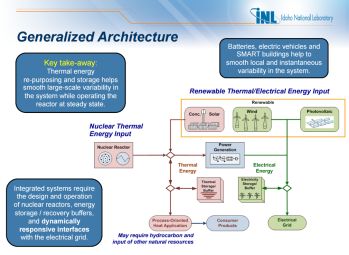

“If you want an ultra-low carbon renewable energy system, you need storage and flexibility. And if you have storage and flexibility, then renewables play just fine with nuclear.” ~ Jesse Jenkins
Imagine if you could only flush your toilet when it’s raining.
More specifically, imagine that your cistern was fed directly from rain on the roof. Unless it’s raining, you get one flush. If you want more of this modest, modern convenience, some sort of second storage tank is required for refilling the cistern each time. But does this solve the limitation? What if, for example, some friends stay over during a heatwave? Like the ‘range anxiety’ long associated with electric vehicles, how big a back-up tank will ever be enough?
The sort of region-wide electricity supply boasted by developed nations is much more complex and arguably more important than functioning toilets (and toilets are very important!). Most demand is met by operating power stations - which are like electricity factories - but for decades there have also been places where this energy is stored at large scale for later use, overwhelmingly in the form of water pumped uphill. In fact, by Yang and Jackson in 2011 ‘Pumped Hydro Storage’ became feasible in the 1960s “when utilities began to consider the possibility of a dominant role for nuclear power.”
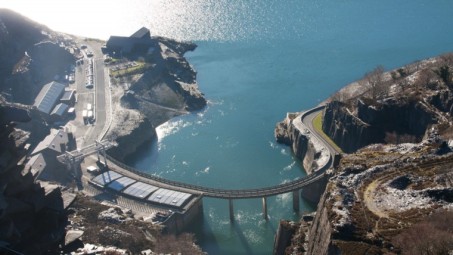
That’s right - grid-scale storage, which is nowadays thought of as the potential enabler of intermittent renewable energy sources, was originally built to partner with baseload nuclear. Indeed, as concluded by Brookhaven National Labs in 1970, “the ideal combination of plants in the generating system is a mix of nuclear and pumped storage units…” The economics made sense: reactors are best run at full output, regardless of demand, and if the excess can be stored overnight when demand (and price) is low, then released the next day when demand peaks, the pumped hydro plant operators can profit from the price difference and make a healthy return on the investment. This “arbitrage” was the economic basis for many large facilities, from Dinorwig in Wales to Castaic in California to Drakensberg in Zambia.
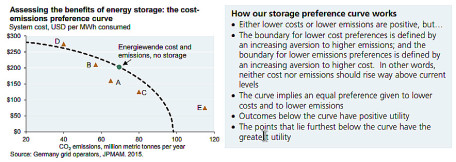
As it turned out, fewer nuclear plants were commissioned than expected, and flexible natural gas turbines were developed to fill the role of daytime “peaking” capacity. Grids continued to meet demand, but with the exception of countries like France they were more polluting than they might have been. It makes no difference to the pumps where the spare electricity comes from; operation is dominated by the economics. This has been illustrated recently in Germany, where high summer solar generation has eroded the case for investing in new storage capacity.
There are alternatives to huge hydro dams: compressed air storage, for example, or more modern, high quality, mass produced lithium ion batteries. Batteries are far more versatile, but are more expensive on an output and capacity basis than pumped storage, with considerably shorter service life, and the hard limits of chemistry will mean improvements are incremental. There’s no Moore’s Law for batteries like there is for printed circuitry.
Also, such technology, exemplified by Tesla’s lithium ion technology, is overwhelmingly marketed as a car-, home- or community-scale energy solution. These units have limits on the maximum they can supply at a given instant (like when turning on the tumble dryer) and can’t be expected to last more than fifteen years. The popular notion of spurning power stations and utility bills by “going off grid” with these batteries and some solar panels faces a number of hard challenges, and may have no climate benefits at all. Considering that halfway-affordable batteries can only come out of huge “gigafactories”, this pursuit ends up swapping one type of centralised supply for another, with an undeniable sacrifice in overall efficiency.
There are real-world examples where scaling up battery storage would be impractical, or has indeed proven to be infeasible. And even if vast batteries could be built, the economics dictate that arbitraging supply from baseload sources provides the highest return, and may even hamper climate action while fossil fuels remain competitive. by the Clean Air Task Force indicates that significant conventional capacity would still be necessary even when majority renewables and “perfect” storage is assumed. Moreover, by J. P. Morgan suggest that dedicating such storage to enabling intermittent sources in California could result in up to five times the cost of keeping conventional generators for backup.
This research might seem to pour cold water on the future potential for storage and batteries in particular, but what is important rather is to impartially focus on what the technology can realistically do as part of a holistic and economical clean energy future.
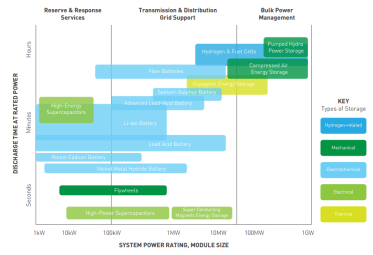
Concentrating solar thermal energy provides the clearest example of storage tied to one specific clean power source. Energy from the sun heats tanks of molten salts, and these can boil water later to maintain output late into the evening. But, again, the heat source doesn’t matter to the storage medium, and of salt storage integrated with the sodium-cooled PRISM fast reactor used surplus nuclear heat to drive a peaking turbine, supplying dramatically competitive baseload AND peak electricity.
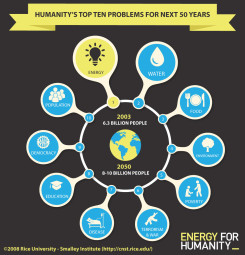
Our future power supply will be complex and necessarily a mix of low emissions technologies, and storage - the enabler of intermittent renewables, and the ideal partner for nuclear - will be part of the interface. It’s fortunate then that groups from the University of Lincoln, , and are working on fully integrated models. Some involve technologies like desalination, which will be crucial for supplying climate-independent water to future populations. Such resilience may only be assured by working with every tool we have, in the smartest way we can. With regionally appropriate energy mixes, there will be electricity, fresh water and flushing toilets for all.